Installation of DC busbar on top of high-voltage switchgear
DC busbars in high-voltage switchgear centralize current distribution, improve reliability, and require careful design for current capacity, thermal management, and symmetry.
Key Considerations for DC Busbar Installation
1. Material Selection: Copper and aluminum are the primary materials for busbars. Copper is preferred for high-current applications due to its superior conductivity, allowing smaller cross-sections and lower heat generation, while aluminum is lighter and more cost-effective but requires larger cross-sections for the same current rating . 2. Sizing and Current Capacity: Busbar cross-sectional area is determined by the expected continuous current and allowable current density. For enclosed DC systems, a conservative guideline is 1.5–2.5 A/mm² for copper under continuous duty. For example, a 300 A load with a target current density of 2 A/mm² requires a busbar cross-section of 150 mm² . 3. Thermal Management: Busbars must handle both steady-state and surge currents. Heat hotspots often occur at terminations and studs rather than along the bar itself. Vertical placement can improve natural convection and heat dissipation, potentially increasing load capacity by 10–15% compared to horizontal placement . 4. Layout and Symmetry: In multi-branch DC systems, busbars should be arranged symmetrically to ensure even current distribution. Unequal resistance in parallel paths can cause imbalanced currents, leading to localized heating and reduced reliability . 5. Mechanical Support and Insulation: Busbars must be rigidly supported to prevent vibration and mechanical stress. Insulated or enclosed busbars reduce short-circuit risk and allow tighter layouts, while bare busbars require careful spacing to prevent arcing . 6. Fault and Short-Circuit Considerations: High-voltage DC switchgear must account for potential short-circuit currents. Busbars should be sized and supported to withstand mechanical forces during faults, and connections should be bolted or welded to minimize resistance and heating . 7. Scalability and Maintenance: A well-planned busbar layout facilitates future expansion, easier protection coordination, and serviceability. Sectionalizing busbars with bypass or tie branches allows maintenance without interrupting supply . 8. Standards Compliance: While IEC 61439 primarily governs low-voltage assemblies, high-voltage DC busbar installations should also consider IEC 60228 for conductor sizing, IEEE C37.20.1 for switchgear design, and project-specific standards for fault duty and insulation requirements .
Installation Best Practices
- Inspect busbar material for defects before installation.
- Ensure all terminations are clean, tight, and corrosion-free.
- Maintain proper creepage and clearance distances for high-voltage DC.
- Use thermal imaging or simulation to verify heat distribution under load.
- Document busbar layout and connections for future maintenance and troubleshooting. By following these guidelines, DC busbars in high-voltage switchgear can achieve reliable, safe, and efficient power distribution, while minimizing maintenance and operational risks .
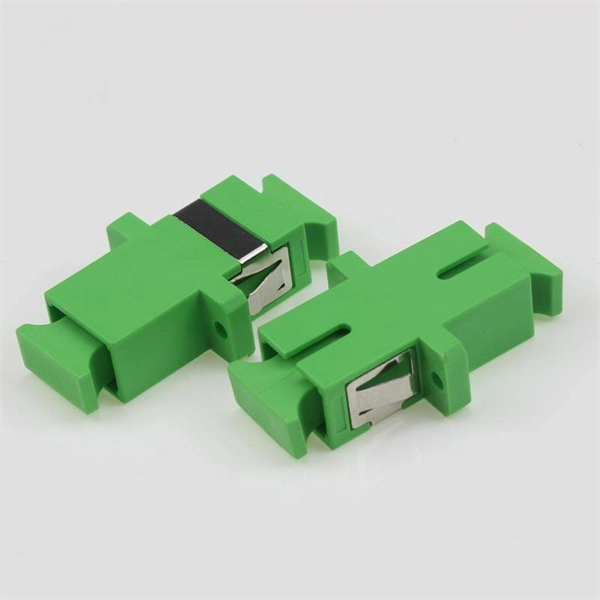 Factory
 Copper for Busbars
It is usually necessary to joint busbars on site during installation and this is most easily accomplished by bolting bars together or by
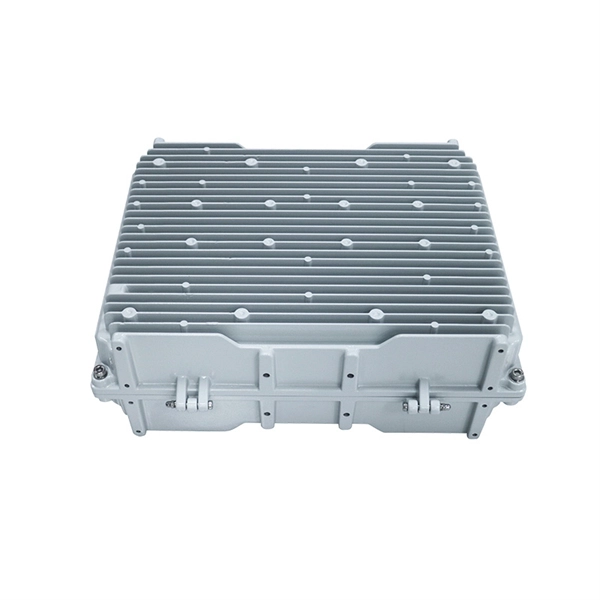 Factory
 High Voltage Busbars
To connect various high voltage (HV) components to the HV system, we also deliver a wide variety of busbars. In cooperation with
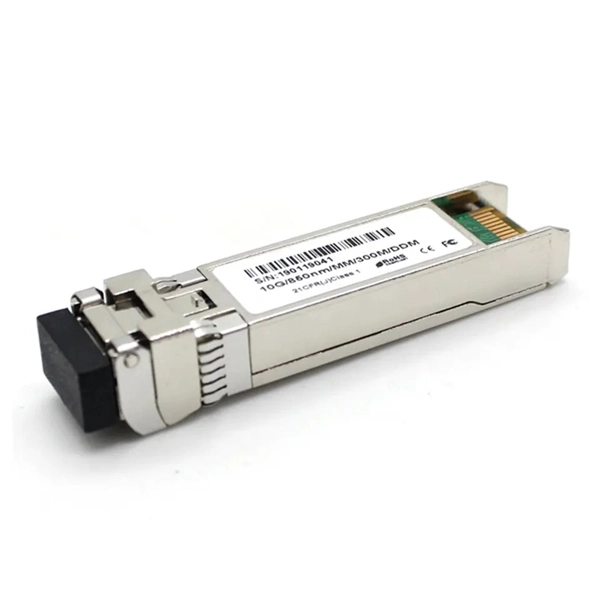 Factory
 Study on Design of Main Busbar System of Large-current High-voltage
The selection of type and specification of main busbar has direct influences on the current-carrying capacity and installation &
 Factory
 MEDIUM VOLTAGE SWITCHGEAR
1 - Introduction to alfa-12 alfa-12 Switchgear offers high personal and operating safety, optimal availability, secure engineering, easy
 Factory
 Technical Application Papers No.11 Guidelines to the construction of a
1 Standards on low voltage assemblies and relevant applicability The recent publication of the new Standard IEC 61439 has imposed
 Factory
 Uniswitch Medium Voltage Switchgear
The busbar connection in the end cubicles are made through the top openings of adjacent cubicles. Access to busbars is possible
 Factory
 High Voltage Switchboard Busbar Design Basics
Busbars act as the main current highways inside high voltage switchboards, linking incoming feeders, outgoing circuits, and
 Factory
 Agrawal-28New
Placing the busbars together reduces the inductance of the busbars ''Xa'', impedance (Z), voltage drop (I.Z) and so also the
 Factory
 Manual for installation and operation HB 602/05 en ZX2 Gas
Voltage transformers for integrated busbar measurement (transformers of metering 3 and 4 in figure 2.3.7.1) are sup-plied loose and
 Factory
 IEC COPPER EDITION
E&I Engineering provide high voltage and low voltage switchgear and ABB provides a range of busbar trunking for power distribution.