Single-end termination of optical fiber cable
Single-end termination involves connecting one end of a fiber optic cable to a device or patch panel using a connector or splice, ensuring low signal loss and high mechanical reliability.
Overview
Single-end termination is the process of preparing and connecting one end of an optical fiber cable to active equipment, patch panels, or other fibers. This allows the fiber to transmit light signals efficiently while protecting the delicate fiber from dust, damage, and excessive signal loss (attenuation) during operation . The termination can be temporary using connectors or permanent using splices .
Termination Methods
1. Connector Termination:
- Connectors create a removable joint between the fiber and equipment or another fiber.
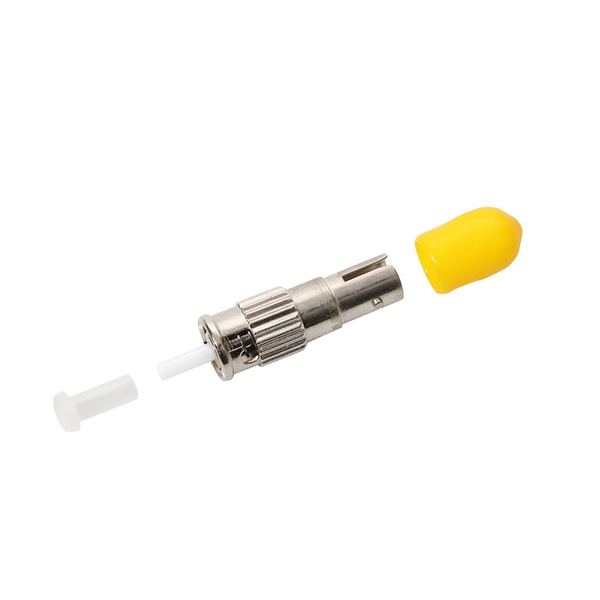
- Common connector types include SC, LC, FC, and ST, each with different ferrule sizes, locking mechanisms, and polishing styles .
- Singlemode fibers typically require factory-made pigtails or splice-on connectors (SOC) due to the precision needed for low insertion loss and minimal reflectance .
- Multimode fibers are easier to terminate in the field using direct connector installation on tight-buffered fibers .
- High-quality terminations aim for low insertion loss (typically ≤0.4 dB for high-performance connectors) and high return loss to minimize back reflections . 2. Splice Termination:
- Splices create a permanent joint between fibers.
- Fusion splicing is preferred for singlemode fibers, offering the lowest loss and reflectance.
- Mechanical splicing is often used for multimode fibers or temporary repairs .
Field vs Factory Termination
- Field Termination: Involves stripping, cleaving, and inserting the fiber into a connector, sometimes using no-epoxy-no-polish connectors with pre-installed fiber stubs and index-matching gel for quick installation .
- Factory Termination: Typically used for singlemode fibers, involving epoxy, heat curing, and precision polishing to ensure optimal optical performance .
Key Considerations
- Ensure the connector type is compatible with the equipment and fiber type.
- Maintain a clean environment to prevent contamination.
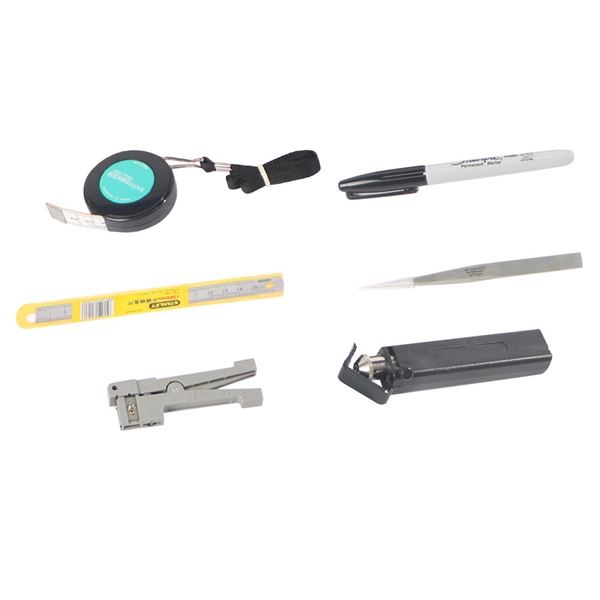
- Use proper tools for cleaving, polishing, and securing the fiber.
- Verify termination quality using insertion loss and return loss measurements; excessive loss or reflections can degrade system performance . Single-end termination is essential for reliable fiber optic networks, providing a secure interface for signal transmission while minimizing optical losses and protecting the fiber from environmental damage.
 Factory
 Lennie Lightwave''s Guide To Fiber Optics
Lennie Lightwave''s Guide To Fiber Optics Termination Termination We terminate fiber optic cable two ways - with connectors that
 Factory
 Terminating and crimping for fiber optics: methods and tips
For termination with a connector, one method is to use a ''pigtail'', which is a short single optical fiber, with a connector
 Factory
 Fiber Optic Termination – CableOrganizer
Tools used in fiber optic termination include a fiber stripper, scribe, Aramid yarn scissors, adjustable cable jacket stripper, polishing
 Factory
 Fiber cable termination
A fiber pigtail is a single, short, usually tight-buffered, optical fiber that has an optical connector pre-installed on one end and a length
 Factory
 The FOA Reference For Fiber Optics
Most field singlemode terminations are made by splicing a factory-made pigtail or splice-on connector (SOC) onto the installed cable
 Factory
 How to Terminate Fiber Optic Cable
Fiber optic termination is the process of preparing the cable''s end for connection to an optical transmitter, receiver, or
 Factory
 Single-mode optical fiber
In fiber optics, a quadruply clad fiber is a single-mode optical fiber that has four claddings. Each cladding has a refractive index
 Factory
 Fiber Optic Cable Splicing Explained
Splicing in optical fiber is the joining two fiber optic cables together. There are 2 methods of cable splicing, mechanical
 Factory
 TERMINATING FIBER CABLE
Once fiber optic cables have been successfully placed, we can focus on managing the ends of the fibers. This process depends on
 Factory
 Optical fiber connector
Field-mountable optical fiber connectors are used to join optical fiber jumper cables that contain one single-mode fiber. Field
 Factory
 Handbook Optical fibres, cables and systems
The ITU-T has published a complete set of Recommendations dealing with the above subjects: Recommen-dations of the ITU-T G
 Factory
 Considerations for Optical Fiber Termination
To terminate an optical fiber cable in the field, the fiber (either tight-buffered or loose fan-out tube) is simply stripped, cleaved,
 Factory
 The FOA Reference For Fiber Optics
After fiber optic cables are installed, spliced and terminated, they must be tested. For every fiber optic cable plant, you need to test
 Factory
 Fiber U Basic Skills Lab Workbook-termination
Fiber Optic Connector Termination Overview It was not long ago that the proper methods used to terminate fiber optic connectors